Key Takeaways
Here are a few traditions some Jewish couples incorporate into their day:
- A traditionall fast on their wedding day to reflect the spiritual significance and importance of the day.
- The bedeken ceremony where the groom veils the bride, symbolizing his appreciation for her inner beauty.
- An eight minute seclusion period immediately following the ceremony to celebrate together.
- The breaking a glass.
- Dancing the hora represent two of the most recognized Jewish wedding rituals.
What Are the Core Jewish Wedding Traditions?
Many Jewish wedding traditions center on a handful of rituals that recur across nearly every ceremony, regardless of denomination. According to 12 Rituals You May See at a Jewish Wedding, breaking the glass and the celebratory hora dance stand out as the most recognizable, familiar even to guests who have never attended a Jewish wedding before and may only know them from films. These moments anchor the celebration and give families a shared vocabulary for the day.
What Makes a Jewish Wedding Legally Binding?
Jewish law sets a simple bar for marriage. According to Wedding Customs: Old, New, Reinvented, a bride accepts an item of modest value from the groom, he speaks words of consecration, and witnesses confirm the exchange. Everything else, including the chuppah wedding ceremony structure, grew up around that core legal act over centuries.
Are Jewish Wedding Rituals Changing Today?
Many couples today are revisiting older customs and adapt them for contemporary tastes. Ancient practices are being rediscovered and reshaped by couples who want tradition alongside a modern sensibility, per the same source. This blending opens the door for interfaith Jewish wedding ideas that honor heritage without rigid formality.
What Happens Before the Ceremony Begins?
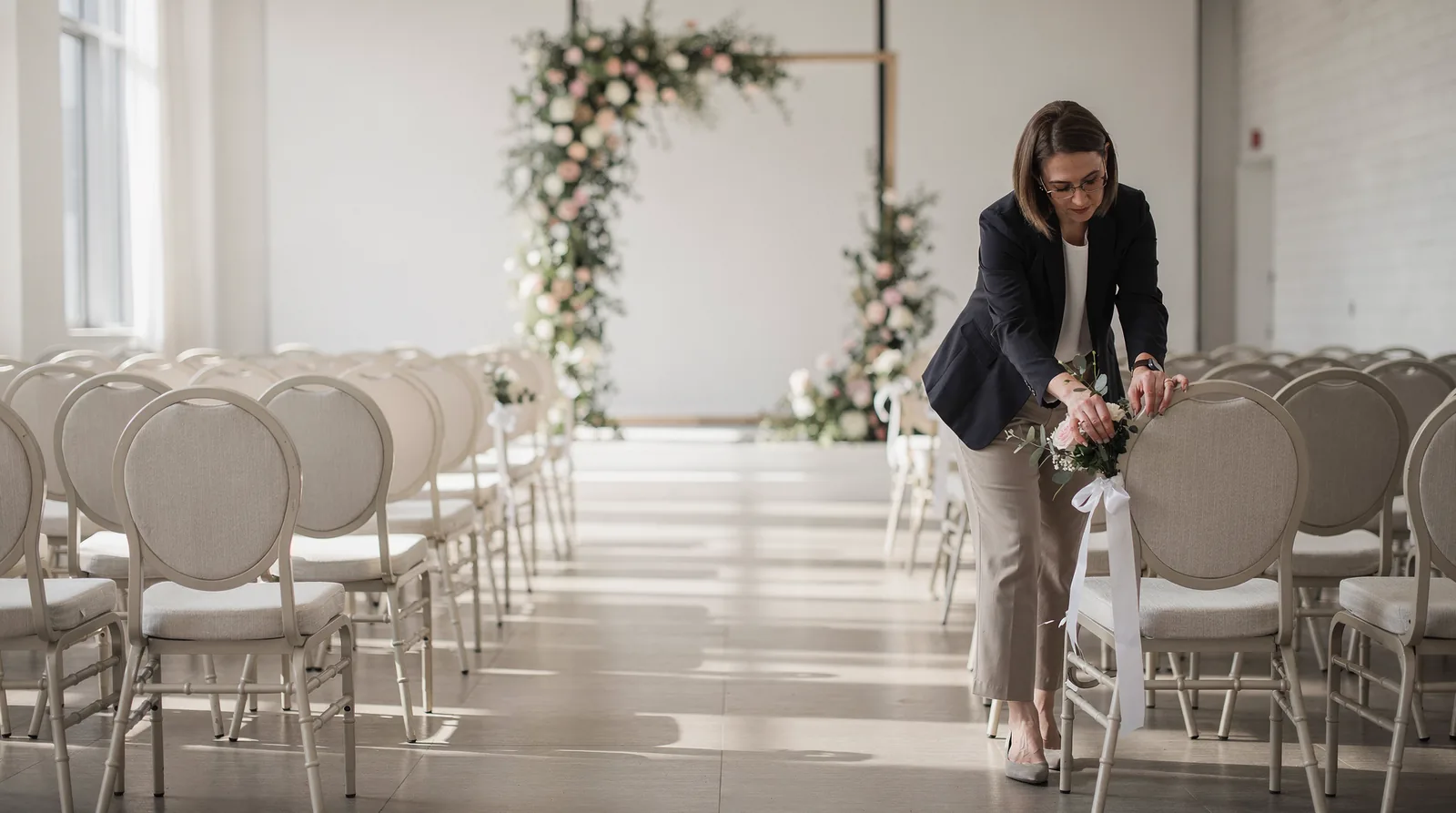
In many of today’s modern Jewish weddings, four distinct rituals unfold before a couple reaches the altar, each one layering meaning onto the day ahead. These moments, rooted in centuries of Jewish wedding traditions, set an emotional tone that carries through the entire celebration. We continue to see couples continue to honor these customs while adapting them to modern settings.
Why do couples fast before a Jewish wedding?
Many couples choose to fast on the wedding day itself. The practice reflects the day’s weight as a time of personal forgiveness, a chance to enter the marriage with a clean spiritual slate before the Chuppah wedding ceremony begins.
Before any vows are exchanged, two foundational rituals typically take place:
- Ketubah signing: An ancient marriage contract spells out the groom’s commitments to the bride, formally witnessed by two appointed individuals.
- Badeken ceremony: The groom veils the bride himself, a gesture meant to express love for her inner character rather than appearance alone.
What is the tradition of separating the couple beforehand?
Family and friends often gather around the couple in separate rooms, offering blessings before the processional starts. This custom, historically called Hachnasat Kallah for the bride’s circle and and Tisch for the Groom’s, keeps the couple apart until the ceremony itself.
The separation builds anticipation rather than distance. Guests move between rooms, delivering well-wishes to each side. For couples blending traditions, these rituals integrate smoothly into interfaith Jewish wedding ideas, offering meaningful structure without requiring every element to match strict custom. Each ritual, whether contract, veil, or blessing circle, prepares the couple emotionally for what comes next under the canopy.
What Rituals Unfold Under the Chuppah?
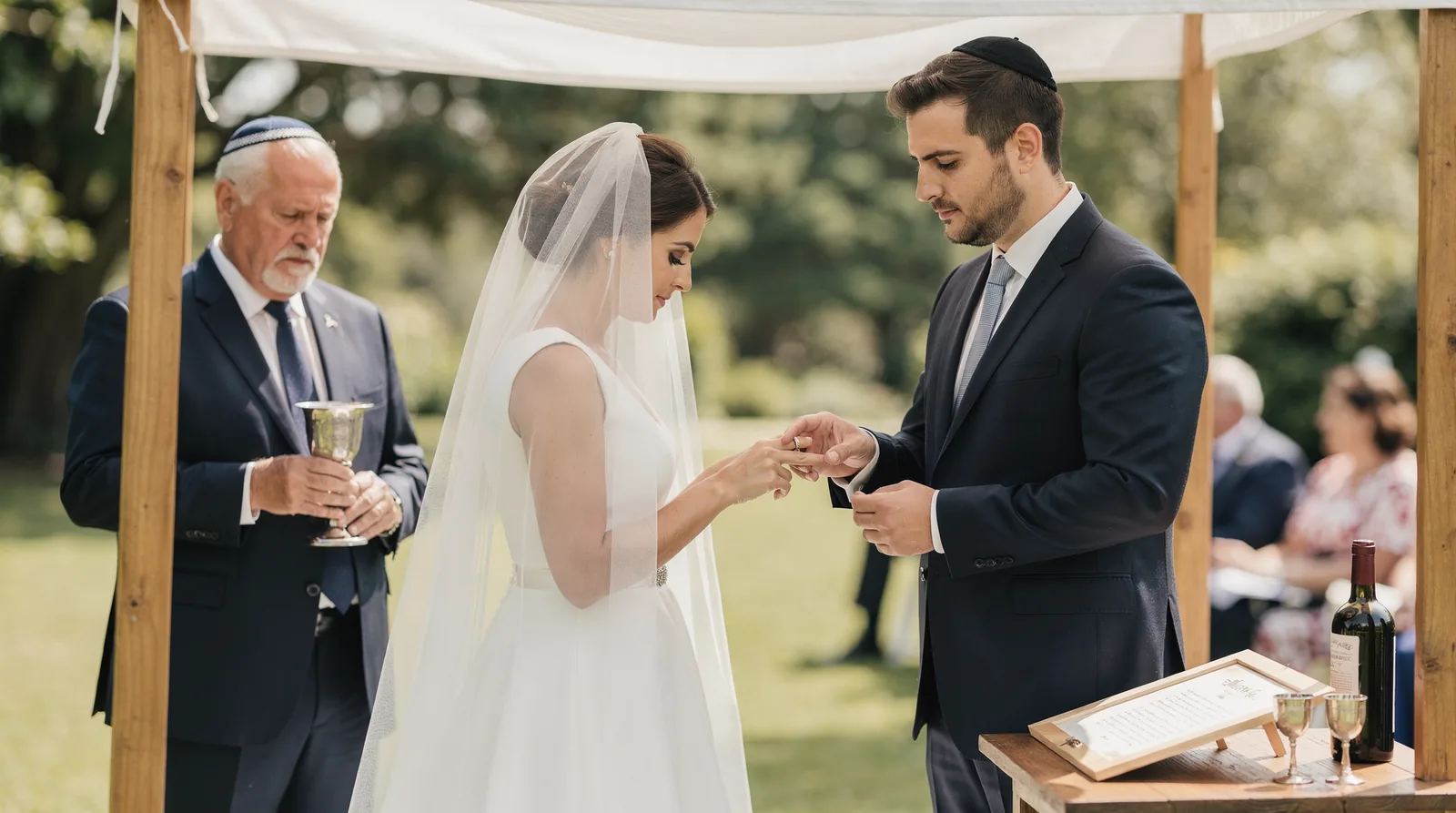
Four rituals typically structure the ceremony beneath the canopy: the vows, the Ketubah signing, circling customs, and the breaking of the glass. Each carrying centuries of meaning.
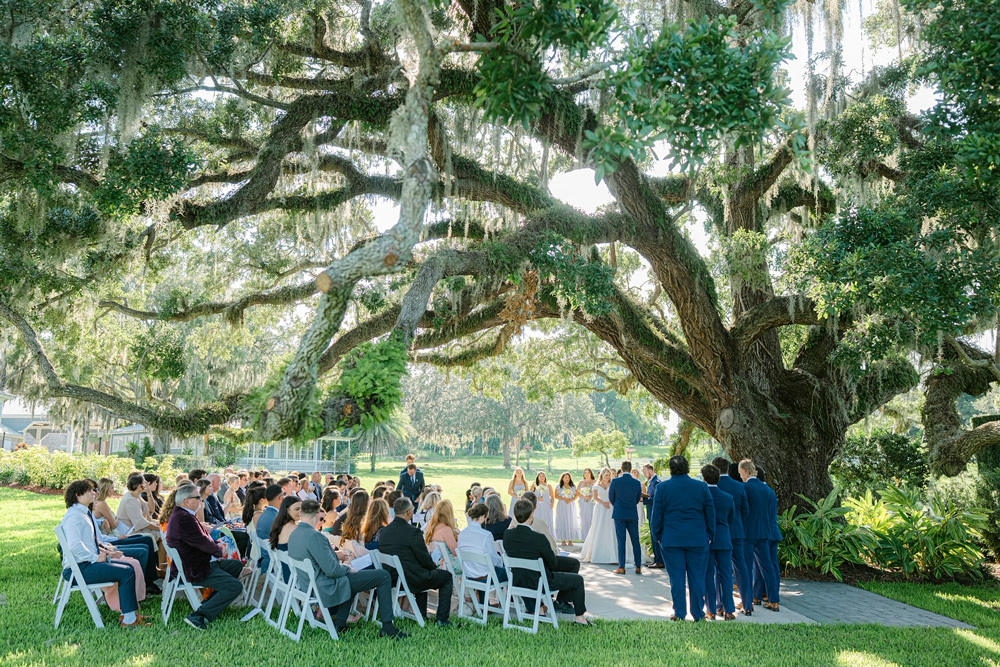
The canopy itself, known as the Chuppah wedding ceremony structure, represents one of the many customs layered into Jewish weddings over generations. Alongside the white gown and veil, the portable chuppah grew from tradition rather than law, yet it remains a visual anchor of the entire ceremony. Open on all sides, with an overhead covering, the Chuppah canopy symbolizes the new home a couple builds together, open to family and community.
Jewish wedding customs followed under the chuppah tend to share a recognizable structure, though no two ceremonies look identical. Rabbi Stacy Bergman notes that a Jewish wedding ceremony is “a little bit fluid” even while following a basic outline. That flexibility gives couples real room to personalize readings, music, and spoken blessings.
What role does the officiant play in personalizing the ceremony?
An officiant shapes how Jewish wedding customs feel on the day itself. Rather than reading a standard script, many officiants speak directly to the couple and weave their personal story into the service. This turns rituals like the Chuppah wedding ceremony or Badeken ceremony into reflections of the couple’s actual relationship, not just inherited tradition.
Why Does the Officiant Tell the Couple’s Story?
Officiants often pause mid-ceremony to speak directly to the couple, weaving in details unique to their relationship. This personal address transforms a traditional script into a reflection of the two people standing beneath the canopy. Many couples in the U.S. request this moment specifically to make the ritual feel less formal and more intimate.
What Happens During the Breaking of the Glass?
Breaking the glass wedding customs close the ceremony with a sharp, celebratory crack. Guests respond with cheers. Recognized widely in film and popular culture, this single gesture remains one of the most anticipated parts of the day, marking the transition from ceremony to celebration.
How Do Couples Celebrate After the Ceremony?
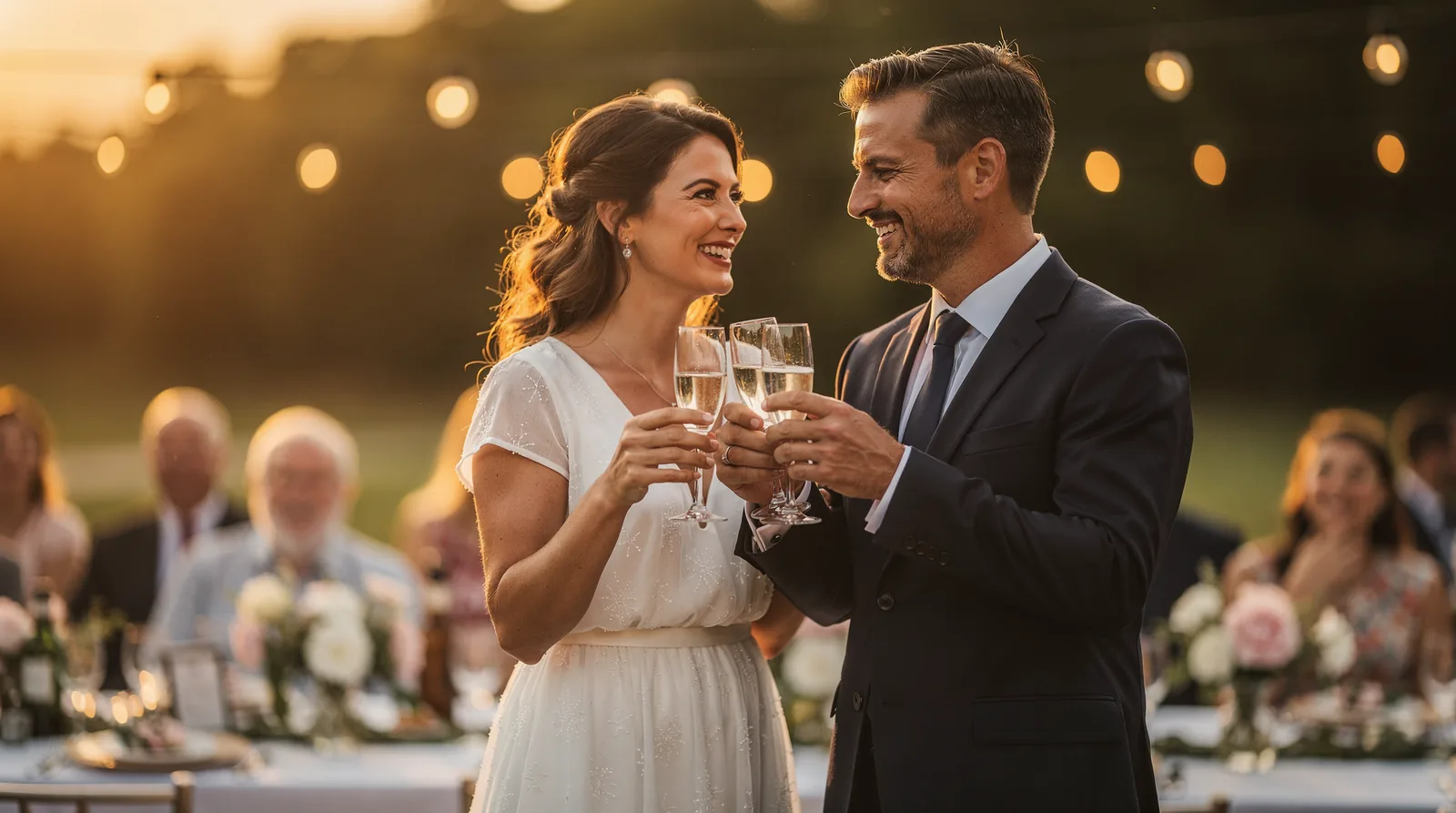
Private seclusion opens the celebration. Newlyweds honor the Yichud tradition of stepping away from guests for at least eight minutes of uninterrupted time together, credited by 13 Jewish Wedding Traditions and Rituals. The moment gives couples their first real breath as a married pair before the reception energy takes over.
Once the party begins, the Hora dance wedding tradition takes center stage. Guests circle the newlyweds, often lifting them on chairs, in a lively ritual familiar even to those who have only seen it depicted on screen. The dance transforms the reception floor into a shared celebration rather than a passive audience experience.
How Can Interfaith Couples Personalize These Traditions?
Interfaith couples often personalize Jewish wedding traditions by blending inherited ritual with their own story, rather than choosing one heritage over another. Couples rediscover and “renovate” old practices to reflect a modern outlook on marriage. The result is a ceremony that honors history while feeling authentically theirs.
Do Reception Traditions Vary By Region?
Regional differences show up less in the rituals themselves and more in how they’re staged. A coastal celebration might weave the hora into an outdoor tent reception. A Midwest ballroom gathering keeps the circle dance indoors near the band. The underlying customs stay rooted in tradition; the setting simply reflects local style.
Catering teams supporting weddings can plan around these moments, timing service so the seclusion period and dance floor energy flow naturally into dinner. Thoughtful sequencing keeps momentum high without rushing meaningful customs.
What are Important Catering Considerations for Jewish Wedding Receptions?
Food brings interfaith families together as much as ritual does. Couples are often interested in exploring Kosher wedding catering options alongside broader menu choices to give every guest a seat at the table. Events by Dubsdread, based in Orlando, FL, supports couples planning Jewish and interfaith weddings, offering menu options built around personal tastes and needs.
Dietary flexibility matters to consider:
- Gluten-free selections for guests with sensitivities
- Vegetarian menus that respect varied traditions
- Dairy-free options that accommodate Kosher-adjacent preferences
Couples weighing interfaith Jewish wedding receptions often find that small, thoughtful choices, a shared reading, a blended ritual, a menu built for everyone, matter more than following one tradition exactly. Personalization, not perfection, is what guests remember.
FAQ
What are the most recognized Jewish wedding rituals today?
Breaking the glass and the hora dance stand out as the most recognizable Jewish wedding rituals, familiar even to guests who have never attended one before, often recognized from films.
What makes a Jewish wedding legally binding?
A bride accepts an item of modest value from the groom, he speaks words of consecration, and witnesses confirm the exchange, this simple exchange forms the legal core of the marriage.
Why do couples fast on their wedding day?
Couples fast to reflect the day’s spiritual significance, using it as a time for personal forgiveness and entering the marriage with a clean spiritual slate before the ceremony begins.
Conclusion
In closing, Jewish wedding traditions in the United States reflect a beautiful blend of ancient customs and contemporary celebration, honoring heritage while embracing the couple’s unique story. Whether observing time-honored rituals like the ketubah signing and breaking of the glass or personalizing ceremonies to reflect modern values, couples create meaningful events that resonate deeply with family and community. These traditions endure because they connect generations, ground celebrations in purpose, and transform a wedding day into a profound spiritual and social milestone that guests remember for years to come.
Research & Sources
This article draws on published research and expert commentary about Jewish wedding customs in the United States, including:
- 12 Rituals You May See at a Jewish Wedding, on the most widely recognized ceremony and reception customs, including breaking the glass and the hora.
- 13 Jewish Wedding Traditions and Rituals, on customs shared across denominations, from the Yichud tradition to the ketubah signing.
- Wedding Customs: Old, New, Reinvented, on the legal requirements of a Jewish marriage and how couples are reinterpreting older rituals for modern celebrations.
- Commentary from Rabbi Stacy Bergman on the structure and flexibility of the Jewish wedding ceremony.
Events by Dubsdread draws on this research alongside hands-on experience planning Jewish and interfaith weddings in Orlando, FL.