Faith-Based Wedding Traditions Across Cultures
Faith-based wedding traditions include ceremony elements like unity candles, scripture readings, and ring exchanges symbolizing eternal commitment, alongside reception customs such as bouquet and garter tosses. Couples and planners blend these sacred rituals with modern touches, honoring heritage while creating personalized celebrations that reflect both spiritual values and individual love stories.
Key Takeaways
- Christian weddings unite couples in holy matrimony through meaningful ceremonies honoring faith and commitment.
- Scripture readings and vows serve as 2 core traditions that reaffirm spiritual dedication between partners.
- Unity ceremonies symbolize the joining of two individuals and families before God and loved ones.
- Faith-based wedding traditions create sacred moments celebrating love, respect, and lifelong commitment in front of witnesses.
What Are Faith-Based Wedding Traditions?
Sacred customs mark a wedding ceremony before, during, or after the vows, each one carrying its own symbolism. Faith-based wedding traditions give couples a way to root their celebration in something larger than a single day. Skipping these customs means losing a thread that connects a couple’s wedding to generations of shared belief.
Denominations differ widely in how they practice their faith. Yet Christian wedding ceremony traditions share one purpose: honoring a couple’s commitment before God. A Catholic nuptial Mass and a nondenominational garden ceremony may look nothing alike on the surface, but both point toward the same promise.
Why do couples choose faith-based elements for a modern wedding?
Couples increasingly want their ceremony to feel personal, not borrowed. Faith-based touches let a couple make an ancient practice their own, shaping it around their unique spiritual journey rather than following a script word for word.
Do these traditions require a specific religious background?
Not necessarily. Some couples blend customs from more than one faith, especially in interfaith wedding rituals that honor both partners’ backgrounds. Others draw from a single tradition and adapt it for a smaller, more intimate gathering.
Common elements couples weave into a ceremony include:
- A unity candle ceremony, symbolizing two families joining as one
- Wedding scripture readings chosen to reflect the couple’s values
- A foot washing wedding tradition, expressing humility and service between partners
- Blessings or prayers offered by family members or clergy
Based in Orlando, Florida, Events by Dubsdread works alongside couples across Central Florida who want these meaningful customs handled with care from planning through the final toast.
How Do Christian Wedding Ceremony Traditions Work?
Christian wedding ceremony traditions unite specific rituals, readings, and vows that mark the joining of a husband and wife in holy matrimony. Each element carries symbolic weight, built to honor faith while celebrating the couple’s love story in front of family and friends. Together, these pieces form a structure that couples and wedding planners can adapt without losing their spiritual core.
At the heart of every ceremony sits a simple truth: biblical marriage represents a lifelong commitment to love and respect one another. That commitment is rarely private. Couples typically exchange vows in front of loved ones, transforming a personal promise into a shared celebration witnessed by an entire community.
Traditional ceremony language reaches further than the couple standing at the altar. Officiants often describe marriage as an honorable estate instituted by God, drawing a parallel between the couple’s union and the relationship between Christ and the Church, an image rooted in Ephesians 5:25–33. This framing elevates the ceremony from a legal formality into a spiritual milestone, which is why many faith-based wedding traditions carry such lasting meaning for couples planning their day.
What Words Open a Traditional Christian Ceremony?
Ceremonies commonly begin by acknowledging that the couple stands in the sight of God, surrounded by friends and loved ones. This opening sets a tone of reverence before the celebration even begins. It also frames the gathering itself as sacred, not just the vows that follow.
Why Do These Structural Elements Matter for Modern Couples?
Couples blending Christian wedding ceremony traditions with personal touches benefit from understanding the framework first. Knowing which elements carry theological weight, like the opening address or the Christ-and-Church symbolism helps planners decide where customization fits naturally. This structure includes:
- An opening declaration recognizing God’s presence
- Vows rooted in lifelong commitment
- Language connecting the couple’s bond to a larger spiritual tradition

What Do Unity Candles And Foot Washing Symbolize?
Shared light and shared humility answer the question at the heart of these two customs. A unity candle ceremony represents two families merging into one flame. The foot washing wedding tradition represents mutual servitude between spouses. Both rituals belong to a broader category of faith-based wedding traditions that carry meaning regardless of denomination, since ceremonial customs performed before, during, or after the nuptials hold special significance rooted in centuries of faith and culture.
Neither ritual demands a rigid script. Couples adapt these moments to reflect their own spiritual journey, choosing readings, music, or wording that feels personal rather than borrowed. That flexibility makes both customs approachable for couples blending backgrounds or reinterpreting inherited traditions for a modern ceremony.
Why Do Couples Light A Unity Candle?
Lighting a shared flame visualizes two lives becoming one household without erasing either individual light. Two individual candles, each held by the couple or their parents, light a single center candle together. The imagery draws on the idea of marriage as a mystical union, a concept long used to describe the joining of two people into a single covenant, echoing the “one flesh” language of Genesis 2:24.
What Does Foot Washing Represent In A Wedding?
Foot washing stages a quiet act of service between partners, each washing the other’s feet before guests. The gesture traces back to John 13:1–17, where Jesus washes His disciples’ feet as a model of servant leadership, and it echoes that same servant-hearted love rather than hierarchy, positioning marriage as mutual care instead of one-sided authority. Couples drawn to this practice often want a visibly humble, less performative moment inside their ceremony.
What Does A Sand Ceremony Symbolize?
A sand ceremony represents two separate lives blended permanently together. Each partner pours their own colored sand into a single shared vessel, and once the grains mix, they can never be fully separated again—a lasting image of a union meant to hold. Couples often extend the moment to include parents or children, adding an extra color to the vessel to represent a newly blended family.
All three customs pair naturally with wedding scripture readings or with symbolic elements borrowed from interfaith wedding rituals, giving couples room to build a ceremony that feels authentically theirs.
How Do Flower Girls And Ring Bearers Reflect Faith?
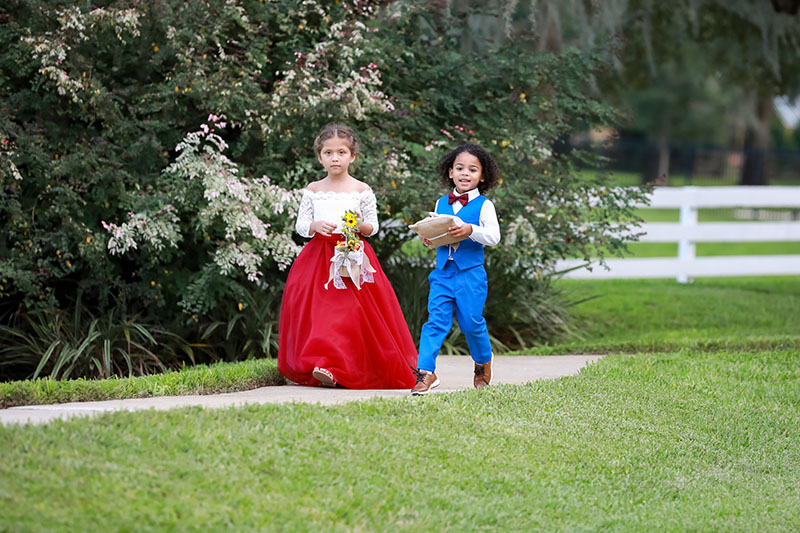
Flower girls and ring bearers carry symbolism that reaches back centuries, long before either role became a staple of faith-based wedding traditions. Their presence in a Christian wedding ceremony traditions lineup adds innocence and continuity to a moment built on covenant and trust.
The flower girl’s origin traces to Greek and Roman customs. Marriage centered on producing children to extend a family’s lineage. In upper-class households of that era, a young girl scattering petals represented fertility and the hope of generations to come. That image still resonates today, even for couples who never mention lineage in their vows.
Where Did The Ring Bearer Tradition Start?
Two theories explain the ring bearer’s history, and both connect the role to reverence rather than decoration. Ancient Egyptian celebrations reportedly featured jewels carried on ornamental pillows, a practice some historians link directly to today’s ring pillow. A second theory points to medieval Europe. A page boy walked ahead of the bride carrying her train and a book of prayers, blending ceremony with devotion.
- Egyptian origin theory: jewels displayed on ornamental pillows during celebrations
- Medieval origin theory: a page boy carrying the bride’s train and a prayer book
Does This Tie To Other Family Roles In The Ceremony?
Family symbolism extends beyond these two roles. The father-daughter dance, rooted in eras of arranged marriage, once marked a father’s formal trust in his daughter’s new husband. Read together, these traditions show a ceremony designed around lineage, protection, and generational blessing, themes couples can lean into when writing wedding scripture readings or shaping interfaith wedding rituals that honor multiple family histories at once.
How Can Interfaith Couples Blend Wedding Rituals?
Interfaith couples blend wedding rituals by selecting elements from each partner’s heritage and adapting them into one cohesive ceremony. Modern interfaith wedding rituals succeed when couples treat tradition as a starting point, not a strict script. Wedding customs today already draw from a wide range of backgrounds. Cultures, reflecting the varied heritages couples bring into a single celebration. That variety gives couples permission to mix elements rather than choose only one path.
Personalization matters more than precision here. Couples can adapt any tradition, whether religious or cultural. It reflects their own shared spiritual journey rather than a rigid historical script. A unity candle ceremony, for instance, works well alongside symbols from a second faith when couples explain the meaning to guests beforehand.
Do Interfaith Weddings Still Use Traditional Customs?
Yes. Many familiar customs stay in interfaith ceremonies but shift in meaning. The bouquet toss began in England, where brides tossed flowers in one direction so they could slip away from guests grabbing at their dress. Couples today keep the gesture purely for celebration, no history of escape required.
Can Family Roles Change to Fit Both Traditions?
Family-focused moments flex easily across cultures. The mother-son dance, a newer addition introduced once the father-daughter dance became standard, shows how receptions absorb new customs over time. Interfaith couples can add or adjust similar dances, blessings, or readings so both families feel represented.
A practical approach includes:
- Selecting one ritual from each faith tradition
- Writing a short explanation for the officiant to share with guests
- Consulting both families early to reduce surprises
FAQ
What are examples of faith-based wedding traditions?
Common elements include unity candle ceremonies symbolizing two families joining as one, scripture readings reflecting the couple’s values, foot washing rituals expressing humility, and blessings offered by family or clergy.
Can couples blend traditions from different faiths?
Yes, some couples combine customs from more than one faith through interfaith wedding rituals that honor both partners’ backgrounds, while others adapt a single tradition for a more intimate gathering.
Who can help plan a faith-based wedding in Orlando?
Events by Dubsdread, based in Orlando, Florida, works alongside couples across Central Florida to handle these meaningful customs with care from planning through the final toast.
Conclusion
In closing, faith-based wedding traditions offer couples a meaningful framework for celebrating their union while honoring the values and beliefs that define their relationship. Whether through religious ceremonies, spiritual rituals, or cultural practices, these traditions create moments of profound significance for the couple and their guests. By thoughtfully integrating these elements into your celebration, you craft an event that reflects your authentic commitment and invites loved ones to witness and support your journey together.