Key Takeaways
- Wedding receptions celebrate newlywed status with loved ones through established traditions and customary activities.
- Events by Dubsdread provides personalized timelines based on traditional wedding reception activities couples select.
- American wedding traditions span generations across regions, honoring cultural and religious heritage at celebrations.
- Event coordinators adjust reception schedules after reviewing the couple’s preferences for traditional activities and timing.
Why Do Wedding Reception Traditions Still Matter?
Wedding traditions have endured for centuries because they carry genuine symbolic weight, many are rooted in beliefs about good fortune for the newly married couple. Traditions also give a reception its emotional rhythm, marking moments that guests remember long after the last dance ends.
Modern couples do not simply inherit these customs unchanged. Traditions adapt over time to reflect contemporary tastes while preserving their original meaning. Is precisely why they remain relevant across generations.
Do wedding traditions still hold symbolic meaning today?
The symbolism behind most wedding reception customs has remained intact even as the outward form evolves. A tradition that once warded off misfortune or invited prosperity still communicates care, hope and celebration just expressed through a modern lens. That continuity is what gives each moment its emotional resonance.
How do traditions shape the guest experience at a reception?
Shared rituals create collective memory. When guests witness a familiar tradition, they participate in something larger than the event itself. A thread connecting the couple to generations before them. Those moments of recognition deepen engagement and make the celebration feel meaningful rather than simply festive.
- Longevity: Many customs have survived centuries of cultural change
- Adaptability: Traditions evolve to fit contemporary styles without losing core symbolism
- Emotional impact: Familiar rituals anchor guests in shared meaning
- Good fortune: Numerous traditions originated as gestures to bless the couple’s future
Couples who incorporate even a handful of these customs give their reception a sense of purpose that no décor trend alone can replicate.
What Is the Tradition of Throwing Rice at Weddings?
Throwing rice at the departing couple is one of the oldest wedding send-off customs, with roots stretching back to ancient Rome and Asia. Rice; a staple grain associated with fertility and prosperity was showered over newlyweds as a communal wish for abundance in their life together.
Why did guests throw rice at weddings?
The gesture was never merely celebratory. Each grain tossed represented a collective blessing from the assembled guests. A tangible expression of goodwill offered at the precise moment the couple stepped into married life. That shared act of giving connected the entire gathering to the couple’s future.
How has the rice toss evolved at modern weddings?
Many venues have transitioned away from traditional rice in favor of alternatives that are gentler on birds and easier to clean. Alternatives such as biodegradable confetti, flower petals, lavender, and bubbles have all become popular stand-ins. The underlying spirit of the send-off, however, remains unchanged: guests send the couple off with joy, noise, and well-wishes as they take their first steps as a married pair.
What Is the Wedding Cake Cutting Tradition?
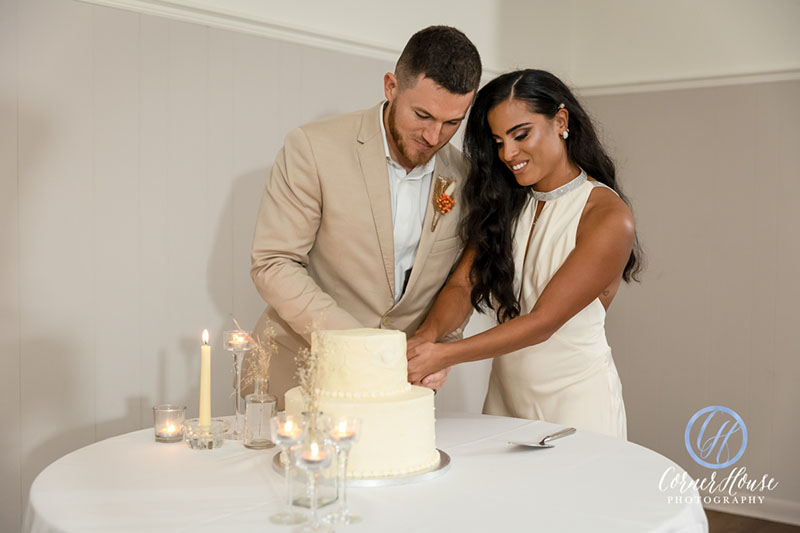
Cutting the wedding cake together is one of the most photographed moments of any reception. The tradition traces back to ancient Rome, where a loaf of wheat bread was broken over the bride’s head as a symbol of fertility and good fortune. Over centuries, that ceremonial breaking evolved into the elegant cake-cutting couples recognize today.
What does cutting the cake together symbolize?
The act of cutting the first slice together carries deliberate meaning. The couple’s joined hands on the knife represent their first act of partnership in married life, a public declaration that they will face challenges and milestones side by side. Guests gather around specifically for this moment because its symbolism is immediately legible, regardless of cultural background.
How do couples personalize the cake cutting?
Modern couples approach the cake cutting in ways that reflect their individual style. Some observe it as a quiet, intimate moment; others treat it as a high-energy celebration with the full attention of the room. Events by Dubsdread builds the cake cutting into the reception timeline with care, coordinating the moment with the catering team and photographer so it unfolds seamlessly, and is captured at its best.
What Is the Tradition of Feeding Each Other Cake?
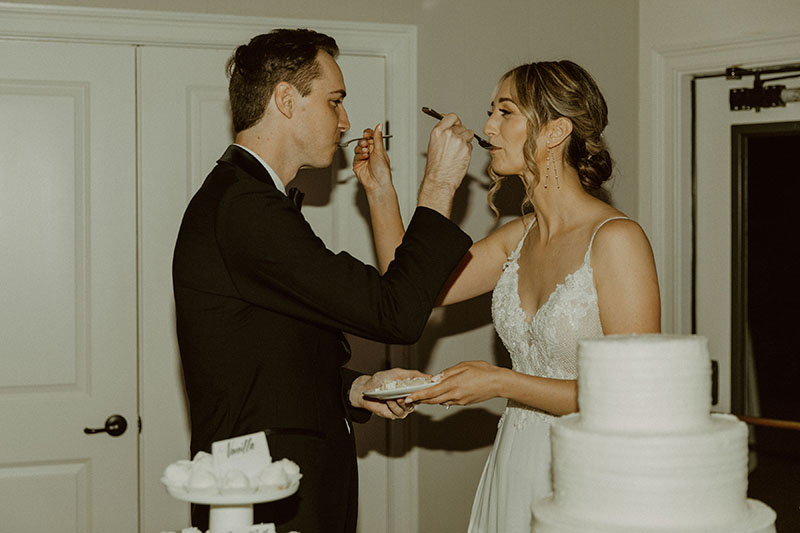
Immediately following the cake cutting, couples traditionally feed each other the first slice. This custom extends the symbolism of the cutting itself, transitioning from a shared act into a personal one, exchanging the first bite as a gesture of care and mutual commitment.
Where does the cake-feeding tradition come from?
The practice of feeding one another cake developed as an expression of the couple’s promise to provide for each other throughout their marriage. Sharing food has carried deep social meaning across cultures for centuries; at a wedding, that exchange becomes a vow in miniature, a small, sweet act charged with intention.
Is the cake smash part of the tradition?
The playful cake smash, where one partner gently (or not so gently) pushes cake into the other’s face, is a modern addition with no historical precedent. Couples should decide in advance whether they want to include it, since reactions tend to range from delighted to decidedly unamused. A coordinator can help couples communicate that preference clearly so the moment unfolds exactly as intended.
What Role Do Toasts Play at a Wedding Reception?
Wedding toasts are among the most emotionally resonant moments of any reception. Delivered by the best man, maid of honor, parents, or other close members of the wedding party, toasts offer guests a window into the couple’s story through the eyes of the people who know them best.
What is the origin of wedding toasts?
The custom of raising a glass to honor the couple dates to ancient Greece, where a host would drink first from a shared cup to demonstrate that the wine was safe, a gesture of trust that evolved over centuries into the celebratory toasts recognized today. By the medieval period, toasting had become a formal social ritual at banquets and celebrations throughout Europe.
How should toasts be timed during the reception?
Toasts are typically delivered during dinner, after guests have been seated and the meal has begun, though some couples prefer to schedule them earlier, during cocktail hour or immediately after the grand entrance. Events by Dubsdread works directly with couples to sequence toasts at the point in the evening that best suits the overall flow, ensuring speakers are prepared and the moment receives the attention it deserves.
- Best man toast: traditionally the first and most anticipated of the evening
- Maid of honor toast: offers a personal perspective from the bride’s closest confidante
- Parent toasts: provide an opportunity for families to welcome the new spouse
- Couple’s toast: a closing moment where the couple thanks their guests directly
What Is the History Behind the Bouquet and Garter Toss?
The bouquet toss originated in ancient England. Wedding guests rushed to tear pieces from the bride’s dress and floral bouquet, believing those fragments carried good luck and fortune. Wedding Traditions like these began as something far less charming than the celebrations couples recognize today.
The original custom was, frankly, chaotic. Guests would mob the bride after the ceremony, grabbing at her gown and bouquet in hopes of claiming a lucky token. The behavior grew so disruptive that brides devised a clever escape strategy: tossing the bouquet in one direction. Slipping away in the other, leaving rowdy attendees distracted while the newlywed made a clean exit. A survival tactic became a beloved ritual.
How Did a Chaotic Escape Become a Beloved Reception Moment?
Over time, the frantic scramble transformed into the lighthearted toss guests anticipate at receptions today. The tradition shed its disorderly roots and took on a celebratory spirit. A moment of fun rather than a flight from the crowd. Both the bouquet and garter toss have survived the test of time precisely because they inject energy and laughter into the reception.
Why Do These Traditions Still Matter at Modern Weddings?
Modern couples include these moments because they create natural gathering points during the reception. Consider what each tradition brings to the event:
- Bouquet toss: draws single guests onto the dance floor and builds anticipation
- Garter toss: adds a playful, lighthearted counterpart to the bouquet moment
- Combined sequence: creates a memorable, high-energy segment that photographers and guests alike look forward to
Both traditions have solidified their place in contemporary wedding culture. Far from fading relics, the bouquet and garter toss remain two of the most recognized and requested reception activities. Proof that a good story, even a surprising one, endures.
Research & Sources
Events by Dubsdread’s own wedding traditions research, published by the team’s event specialists, traces the garter toss to either ancient France or England, tied to the same rowdy-guest customs that shaped the bouquet toss. As the brand’s research documents, guests once escorted the bride and groom to their chambers to claim the bride’s stockings as proof of the marriage or as a good-luck token, a practice the groom eventually preempted by tossing the garter himself before guests could intervene. That documented history reinforces why the bouquet and garter toss endure as a paired tradition: both trace back to guests seeking a tangible piece of the couple’s luck, and both evolved into the lighthearted, voluntary customs couples now choose to include.
How Do Couples Make a Grand Exit at the End of the Reception?
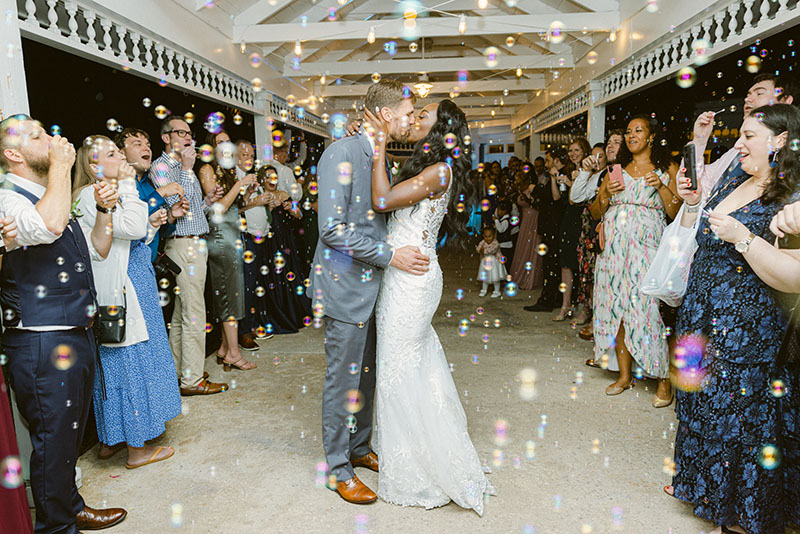
The grand exit is the final, defining moment of the wedding reception the last image guests carry with them as the evening closes. Far more than a simple departure, it is a choreographed send-off that brings the entire celebration to a joyful, memorable conclusion.
What are common grand exit ideas?
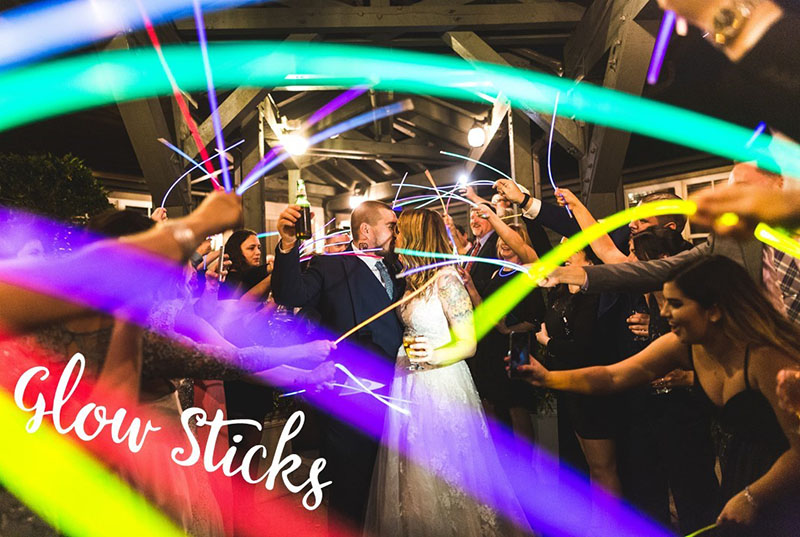
Couples have no shortage of creative options for the grand exit. Sparklers remain one of the most popular choices, forming a glowing tunnel that photographs beautifully in the evening light. Other common approaches include:
- Sparklers: a warm, dramatic tunnel of light for evening receptions
- Flower petals or dried lavender: an elegant, fragrant alternative for outdoor ceremonies
- Bubbles: a soft, whimsical option well-suited to daytime or garden receptions
- Ribbon wands: a colorful, guest-friendly choice that works at any hour
- Confetti cannons: high-energy and visually striking for couples who want a bold finale
Why does the grand exit matter so much?
The grand exit signals closure in the most celebratory possible way. It gives guests a clear, active role in one final send-off and provides photographers with a dynamic, emotion-filled image to close the wedding gallery. When planned well, it leaves every guest feeling as though they were part of something genuinely special.
Events by Dubsdread coordinates the grand exit as a deliberate element of the reception timeline, ensuring guests are assembled, supplies are distributed, and the couple’s departure is perfectly timed, so the final moment of the evening is as polished as the first.
How Can Couples Personalize Classic Wedding Reception Traditions?
Couples personalize classic Wedding Traditions by layering personal meaning onto time-honored customs. Transforming inherited rituals into genuine reflections of their own story. The most enduring traditions offer a flexible framework, not a rigid script.
How Does Personalization Strengthen a Wedding Reception?
Personalization transforms standard reception moments into lasting memories. Couples can adapt classic elements in several ways. Each choice becomes a conversation piece that connects guests to the couple’s history.
Events by Dubsdread supports this personalized approach through dedicated coordinators, detailed tastings. Thorough proposals that help clients align their vision, logistics, and costs. The result is a reception where every detail, from the menu to the meaningful traditions, feels intentional. That commitment to personalized service has earned Events by Dubsdread recognition including The Knot Hall of Fame, The Knot Best of Weddings, and WeddingWire awards, reflecting consistent client satisfaction across countless celebrations. That track record spans three exclusively managed Central Florida venues, Historic Dubsdread, The Highland Manor, and Azalea Lodge at Mead Botanical Garden, where dedicated day-of venue coordinators are included at no additional charge and where the team has guided celebrations ranging from intimate gatherings to weddings of up to 200 guests.
FAQ
Why do wedding reception traditions still matter today?
Traditions carry symbolic weight rooted in beliefs about good fortune. Give a reception its emotional rhythm, marking moments guests remember long after the last dance ends.
What activities does Events by Dubsdread coordinate for couples?
Events by Dubsdread in Orlando, FL, builds personalized timelines based on traditional wedding reception activities selected by each couple through a dedicated event coordinator.
When does the cocktail hour take place?
The cocktail hour takes place immediately after the wedding ceremony, bridging the gap between the ceremony’s close. The reception’s formal start while the wedding party steps away for photographs.
Conclusion
Wedding reception traditions, from the rice toss and cake cutting to the bouquet toss, garter toss, and grand exit, give each celebration its emotional arc, connecting couples and guests to customs that have carried symbolic meaning for centuries. Every tradition covered here, whether rooted in ancient Rome, Victorian England, or medieval Europe, shares a common purpose: marking the beginning of married life with intention, joy, and communal blessing. Personalizing these moments, as explored throughout this article, transforms inherited rituals into genuine reflections of a couple’s own story without losing the resonance that makes them endure. Couples planning their reception who want each tradition woven into a seamless, personalized timeline are welcome to connect with Events by Dubsdread in Orlando, FL.